

- Senior Writer
- Author
 3706
Ievgen Chemborysov
Ievgen Chemborysov
Author
3706
Ievgen Chemborysov
Ievgen Chemborysov
Author
 3706
3706
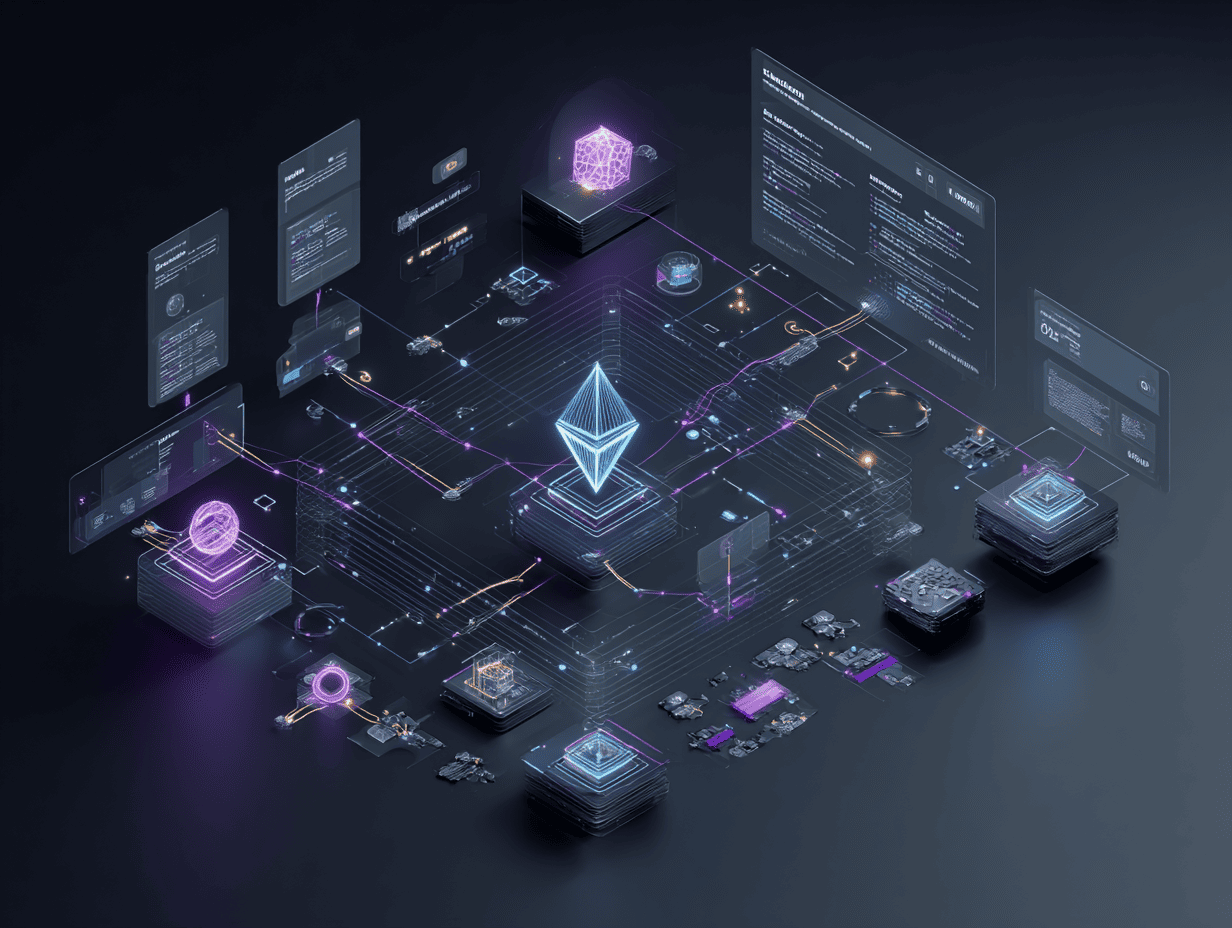
Decentralized applications (DApps) are a major focus in the crypto and blockchain space today. Unlike traditional apps that rely on centralized servers, DApps use Web3 technologies to handle logic execution and backend functions. The growing interest in DApp development is driven by their immutability and secure, tamper-proof nature. Many development guides cover the basics and key steps for creating DApps.
This article offers a comprehensive guide to blockchain DApp development. You will learn how to build a DApp, understand the costs involved in DApp development, and explore the essential components required for creating a successful DApp.
A decentralized application (DApp), is a type of application that operates on a blockchain network. Unlike traditional apps, which run on centralized servers, DApps run on a peer-to-peer (P2P) network of computers. The decentralized nature of applications allows DApps to function without a single controlling authority and to operate autonomously.
Similar to cryptocurrencies, DApps use smart contracts—self-executing programs that automatically enforce and execute the terms of agreements. These smart contracts help manage operations and interactions within the app without requiring human intervention.
Smart contracts are important for DApp development, as they handle tasks ranging from financial transactions to recording in-app events.
For DApp development, an application generally needs to meet the following criteria:
Storing large amounts of data directly on the blockchain can be costly and inefficient. Off-chain solutions, such as cloud data warehouses, are often preferred because they offer:
These benefits make off-chain storage more practical for DApps with significant data needs.
Understanding decentralized application (DApp) development starts with recognizing the nature of DApps. Unlike traditional apps, DApps operate on decentralized blockchain networks instead of centralized servers. While the backend logic is managed by smart contracts on the blockchain. It ensures high security and resistance to tampering; the frontend and user interfaces can be built using any language and hosted on traditional servers to interact with the blockchain.
Learning DApp development offers numerous advantages. Decentralized applications enhance privacy, reduce downtime, and are resistant to censorship. Most importantly, they create a trustless environment where logic is executed transparently and securely.
However, developing DApps comes with its own set of challenges. You must navigate the complexities of running logic on a distributed ledger, which can introduce overhead compared to centralized servers. Additionally, the user experience for DApps differs significantly from that of traditional applications, necessitating new approaches and considerations in design and functionality.
Understanding the distinction between centralized and decentralized apps can be quite revealing. While the user interfaces of both types of apps might look similar, their underlying architectures are fundamentally different.
Centralized apps operate on traditional server models. In this setup, a single entity controls and manages the app, including its server infrastructure and data. This means that the creator has full control over the application and its features. A good example of centralized apps is Microsoft Office where Microsoft dictates the functionalities and user experience.
DApps, on the other hand, leverage decentralized networks for their operations. Unlike centralized apps, DApps are built on peer-to-peer networks such as Ethereum or Solana. Here are some key aspects of DApps:
Despite these differences, the front end of a DApp can be hosted on centralized servers to enhance performance and efficiency. However, for an app to be considered truly decentralized, its backend logic and data storage must be distributed across a decentralized network.
The core difference lies in how the backend is managed: centralized apps rely on a single authority, while DApps operate on decentralized networks, emphasizing user control and transparency.
DApp development costs typically more than building a traditional centralized app. This higher cost is due to the need for specialized blockchain expertise, blockchain-specific tools, and a less mature ecosystem. On average, DApp development costs can range from $40,000 to $300,000.
While costs are decreasing as the industry evolves, DApp development remains more expensive than conventional centralized applications. The wide cost range reflects the complexity of the features you plan to include. A simple DApp will be less expensive than a complex one with advanced functionalities.
Additionally, deploying a smart contract or DApp on a blockchain involves network fees, which can be significant depending on the platform.
Once a smart contract is deployed, it is immutable, meaning it cannot be altered. If there is a bug or issue, you would need to deploy a new contract, which can be both challenging and costly.
To learn how to build a DApp, you should have a basic understanding of its core components/ Here’s an overview of the basic elements involved:
Smart contracts are fundamental to DApp functionality. They define the application’s business logic and state, and they are deployed on the blockchain. These contracts execute predefined rules automatically, enabling the decentralized nature of the application.
While the backend of a DApp is handled by smart contracts on the blockchain, the front end is built using traditional web technologies like JavaScript and HTML. This approach allows developers to use established tools and frameworks.
The user interface (UI) must interact with the smart contracts through client-side libraries. Examples of these libraries include Web3.js and Ethers.js, which facilitate the connection between the UI and the blockchain.
Choosing the right data storage solution is crucial for DApp development. Storing data directly on the blockchain can be costly, so many developers use off-chain storage solutions. For instance, IPFS (InterPlanetary File System) can store large amounts of data while keeping essential business logic and state on the blockchain.
Conventional cloud storage systems are also commonly used. Additionally, some developers opt for decentralized storage solutions to maintain the trustless properties of dApps.
When developing decentralized applications (DApps), several key dependencies are necessary. Here’s a breakdown of the common tools and libraries you’ll need to install as prerequisites:
NPM is a crucial tool for managing JavaScript packages and libraries within the Node.js environment. Before you start building your DApp, ensure that NPM is installed and properly configured.
Truffle is a widely used development framework for creating Ethereum-based dApps. It provides a suite of tools for writing, testing, and deploying smart contracts using Solidity. Truffle also assists in developing the client-side application, making it a valuable resource for dApp development.
Ganache is a local blockchain emulator that allows you to deploy and test your DApps in a controlled environment. Available as part of the Truffle suite, Ganache creates an in-memory blockchain that simulates the Ethereum network, facilitating development and debugging.
Metamask is a browser extension wallet that connects your DApp to the Ethereum blockchain. Available for Google Chrome and other browsers, Metamask enables users to interact with your dApp through their Ethereum accounts.
For programming in Solidity, syntax highlighting enhances code readability and helps prevent errors. Since many IDEs and text editors lack built-in support for Solidity syntax, you should install a package or plugin that provides syntax highlighting for better development efficiency.
Now that you’re familiar with decentralized applications (DApps), it’s time to dive into the process of how to build a DApp. Here’s a step-by-step guide to help you turn your DApp concept into reality.
Before you start coding, clarify your DApp's mission. Determine the problem you aim to solve and who your target users are. Are you addressing issues like online voting, supply chain inefficiencies, or data sharing?
Consider the future of your DApp—what are your long-term goals related to DApp development cost? Understand your audience and their needs, as their feedback will shape your app’s success. A clear, well-defined purpose will guide your decisions throughout the development process.
Smart contracts are the backbone of DApp development. Begin by outlining the logic and functionality of your smart contract. Most developers use Ethereum due to its familiarity and support for token-based applications.
Map out the contract’s triggers, outcomes, and flows. Ensure security is a priority to avoid potential vulnerabilities. Keep your code efficient and straightforward to minimize errors and reduce transaction costs.
Develop both the front-end and back-end of your app. Since DApps are open-source, you need a working prototype that users can interact with during development.
Start with basic UI designs and refine them based on user feedback. Use an iterative approach to continuously test and improve the app until it’s ready for broader use.
Backing up data is crucial but often overlooked. Decentralize your backups to ensure multiple layers of safety. Encrypt your backups to protect them from unauthorized access.
Regularly back up your data and test restoration processes to ensure they work correctly. For DApp data, consider blockchain-native storage solutions like Arweave, which offer decentralized options for data protection.
Security is vital for any DApp, especially given its decentralized nature. Blockchain technology offers robust security features that surpass traditional systems.
Enhance user security with features like OAuth or SAML for secure logins. For Web3 applications, consider using solutions like Moralis for seamless, secure integration with various blockchains and wallet systems.
The above DApp development steps will guide you on how to build a DApp. By following these steps, you can effectively build and secure your DApp, ensuring it meets user needs and operates reliably.
Deciding whether to build a decentralized application (DApp) involves weighing its benefits and drawbacks. If you’re exploring DApp development, you might be curious about its unique advantages or questioning its value compared to traditional apps. Here’s a breakdown of the pros and cons to help you evaluate your project.
The technical guide on blockchain DApp development provided an example of how to build a DApp, offering insights into the fundamental components, the significance of dApp creation and DApp development cost. It also covers essential dependencies for developing and deploying DApps.
With the increasing popularity of DApps in the Web3 space, there are promising career opportunities in DApp development. Mastering best practices and selecting the right tools, frameworks, and libraries can give you a competitive edge in the Web3 job market. Explore professional training courses to gain a comprehensive understanding of DApp development.
If your business needs more power than a VPS can provide, experience top-tier web hosting with Blueservers, where our commitment to providing affordable yet exceptional hosting solutions is our highest priority. Enjoy guaranteed resources with unlimited servers that offer boundless capabilities. Benefit from complete control with SSH and VNC access, ensuring you have full management over your servers.



Start for free and unlock high-performance infrastructure with instant setup.
Your opinion helps us build a better service.